Vivo X300 Pro vs iPhone 17 Pro Max vs Galaxy S26 Ultra vs OnePlus 15: India's 2026 Flagship Battle Just Got Real — And Pixel Is the Dark Horse Nobody Saw Coming
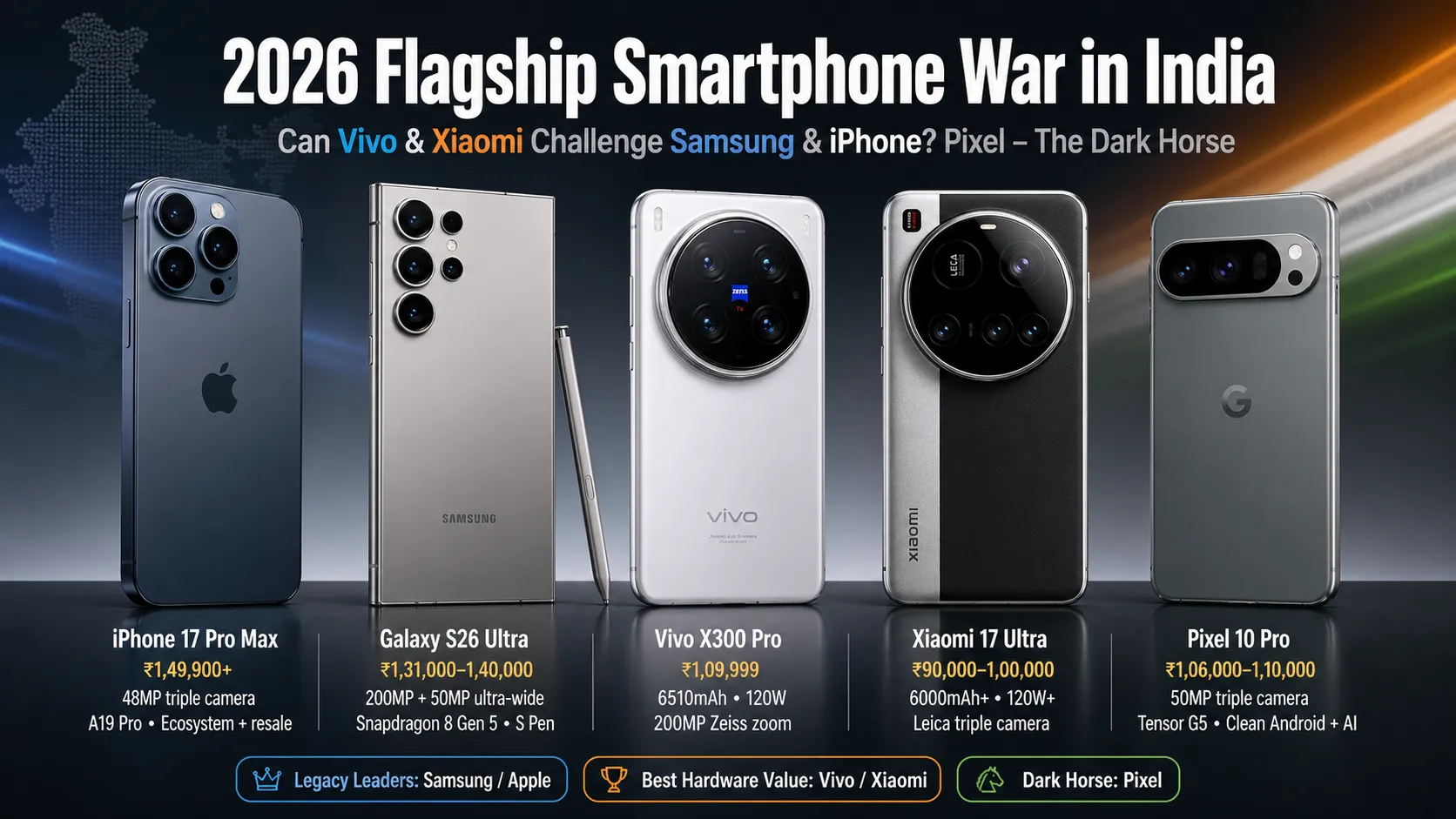
Ai generated image
India's premium smartphone fight is no longer a two-horse race. For nearly a decade, Apple and Samsung have owned the ₹1 lakh-plus shelf in this country - propped up by ecosystem lock-in, deep service networks, and the kind of resale value Indian buyers quietly factor into every flagship purchase. April 2026 is the month that math finally got complicated.
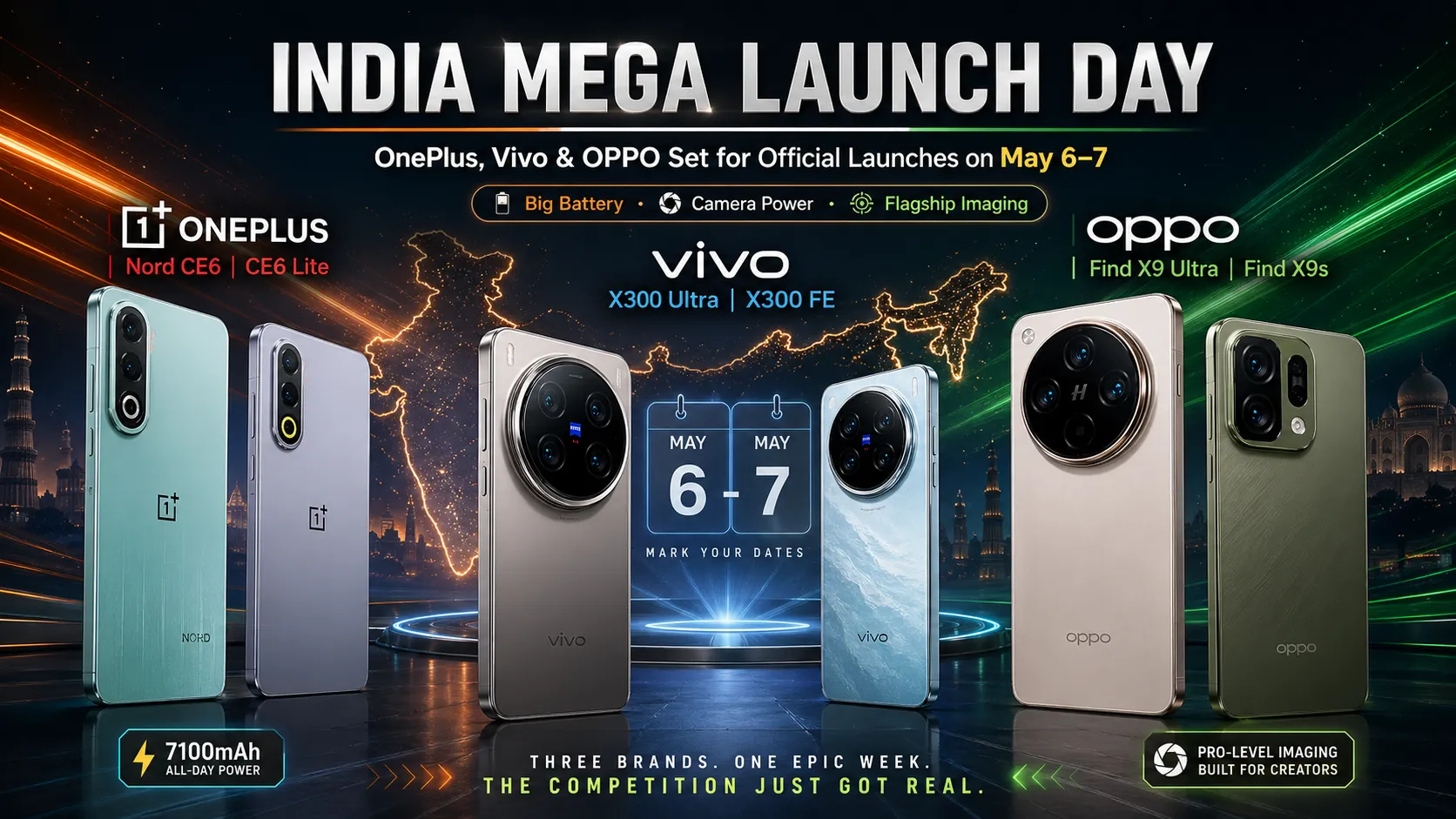
Vivo has dropped the X300 Pro at ₹1,09,999 with a 6,510mAh battery and a 200MP Zeiss periscope that genuinely embarrasses phones costing ₹40,000 more. Xiaomi has brought the Leica-tuned 17 Ultra to India with a world-first mechanical continuous optical zoom. OPPO's Find X9 Pro is doing serious damage with a Hasselblad-tuned camera and a 7,500mAh battery. OnePlus has gone all-in on battery and gaming with a 7,300mAh cell at under ₹73,000. And Google has quietly slipped the Pixel 10 Pro into the same price band as the Vivo - with seven years of updates.
Here's the full picture, the actual prices, and what Indian buyers are saying on Reddit and X right now.
India flagship price + spec comparison (April 2026)
| Phone | Starting Price (₹) | Battery / Charging | Camera Highlights | Processor | Software Support |
|---|---|---|---|---|---|
| iPhone 17 Pro Max | 1,49,900 (256GB) | ~4,832mAh / 40W wired | 48MP triple, class-leading video | Apple A19 Pro | 6–7 years iOS |
| Galaxy S26 Ultra | 1,39,999 (256GB) | 5,000mAh / 60W wired | 200MP main + 50MP 5x periscope, S Pen | Snapdragon 8 Elite Gen 5 | 7 years |
| Xiaomi 17 Ultra | 1,39,999 (16+512GB) | 6,000mAh / 90W + 50W wireless | Leica 50MP main, 200MP periscope, 50MP UW | Snapdragon 8 Elite Gen 5 | 6 years HyperOS |
| OPPO Find X9 Pro | 1,09,999 (launch) | 7,500mAh / 80W wired | Hasselblad 50MP+50MP+200MP triple | MediaTek Dimensity 9500 | 4–5 years ColorOS |
| Vivo X300 Pro | 1,09,999 (16+512GB) | 6,510mAh / 90W+ | 200MP Zeiss periscope, IP68/IP69 | MediaTek Dimensity 9500 | 4 years OriginOS |
| Pixel 10 Pro | 1,09,999 (256GB) | 4,870mAh / 30W wired | 50MP triple + best-in-class AI processing | Tensor G5 | 7 years |
| OnePlus 15 | 72,999 (12+256GB) | 7,300mAh / 80W wired | 50MP main, 165Hz display | Snapdragon 8 Elite Gen 5 | 4 years OxygenOS |
All prices reflect base storage variants on official India channels as of April 29, 2026. OPPO Find X9 Pro currently retails closer to ₹97,999 after market discounts.
Who actually wins the 2026 flagship segment in India?
1. Apple and Samsung still own the legacy crown - but the moat is shrinking
Apple continues to dominate revenue share in India's premium segment. iPhones still retain 60–70% resale value after two years, the service network is unmatched, and "iPhone prestige" is a real factor in metro buying decisions that no spec sheet captures.
Samsung's Galaxy S26 Ultra brings Privacy Display mode, a 200MP main sensor, S Pen integration, faster 60W charging this generation, and seven years of software updates — the longest commitment among Android OEMs alongside Google.
The catch: both are now meaningfully more expensive than the competition. The S26 Ultra at ₹1,39,999 sits at the same price as the Xiaomi 17 Ultra. The iPhone 17 Pro Max at ₹1,49,900 is ₹40,000 more than the Vivo X300 Pro. That gap is what's reshaping the conversation.
2. Vivo X300 Pro, Xiaomi 17 Ultra and OPPO Find X9 Pro: the new "value flagship" tier doesn't exist anymore
These are no longer the alternatives Indian buyers settle for - they're phones legitimately competing on hardware.
The Vivo X300 Pro packs a 6,510mAh battery (one of the largest in mainstream flagships), the new MediaTek Dimensity 9500, Zeiss-tuned optics with optional 200mm and 400mm Telephoto Extender lenses, IP68/IP69 rating, and 8K video. For ₹1,09,999, it undercuts the Galaxy S26 Ultra by ₹30,000.
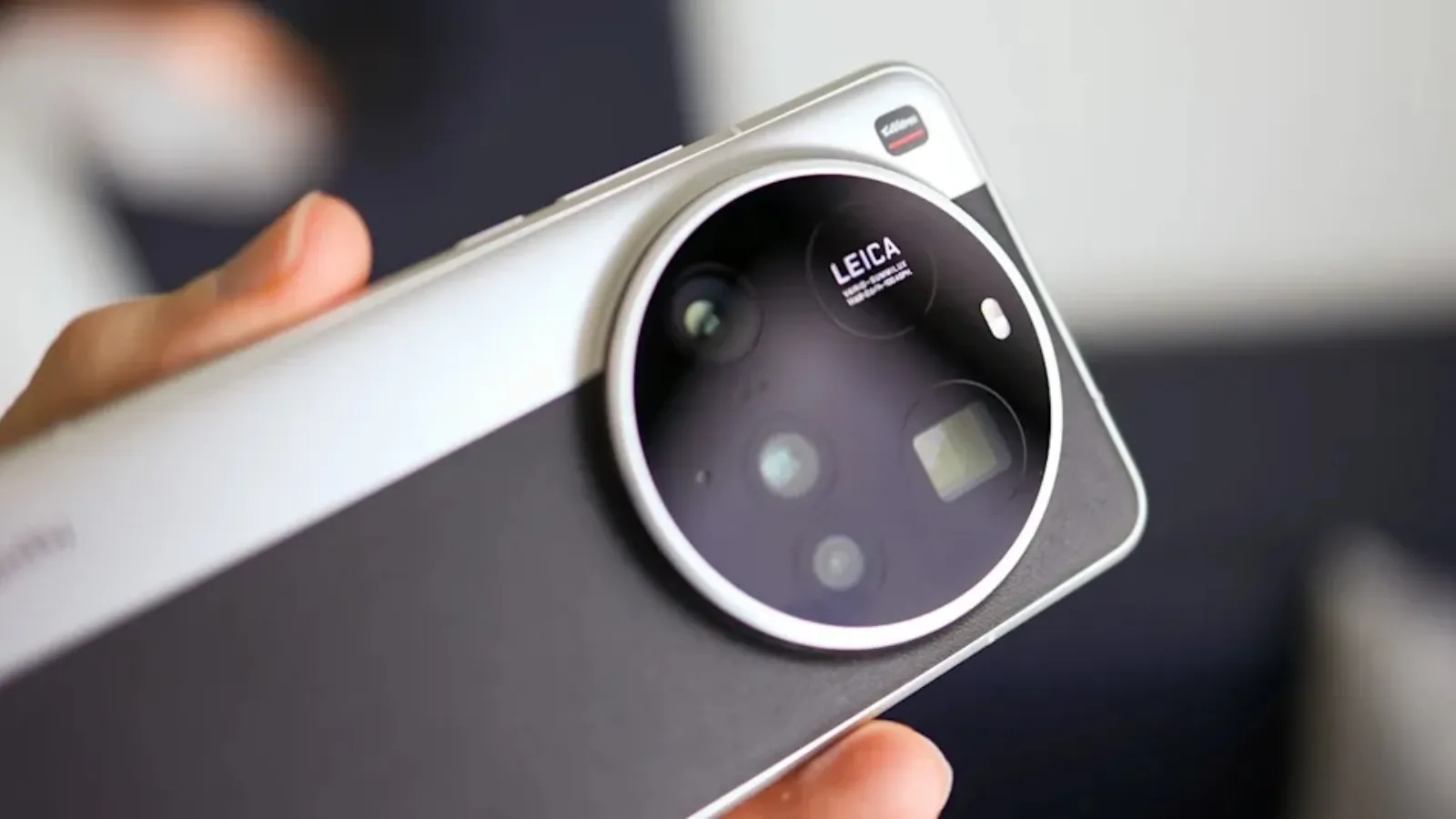
The Xiaomi 17 Ultra is the spec sheet headline-maker: a 1-inch Light Fusion 1050L main sensor, a 200MP periscope with mechanical continuous optical zoom between 75–100mm — the world-first system that won "Best in Show" at MWC 2026 — plus the Snapdragon 8 Elite Gen 5 and a free Photography Kit Pro (worth ₹19,999) during early-bird sales.
The OPPO Find X9 Pro is the dark camera horse. Hasselblad-tuned 50MP+50MP+200MP triple rear setup, 120x Super Zoom, a massive 7,500mAh battery, 80W charging, and Hasselblad's color science genuinely pulls ahead of Vivo and Xiaomi in skin-tone rendering. Currently selling around ₹97,999 in the open market — making it the most aggressively priced true flagship in the lineup.
Vivo currently sits at #1 in India's overall volume share in early 2026. Xiaomi is the largest Leica partnership in this market. OPPO operates one of India's largest phone manufacturing facilities at Greater Noida, which is starting to pay dividends in pricing flexibility.
3. OnePlus 15: the gamer's flagship at half the price
At ₹72,999, the OnePlus 15 sits a tier below but has been the surprise volume seller of the season. A 7,300mAh battery (the largest in this comparison), 165Hz LTPO AMOLED, the same Snapdragon 8 Elite Gen 5 that powers the Galaxy S26 Ultra and Xiaomi 17 Ultra, and 80W charging.
The trade-off is camera hardware - the 50MP main sensor and selfie cam don't compete with the periscope monsters above. But for buyers who prioritize raw performance, gaming, and battery life over imaging, OnePlus has built the most aggressively-specced phone under ₹75,000 in India right now.
4. Pixel 10 Pro: the dark horse the spec-sheet crowd is missing
At ₹1,09,999, the Pixel 10 Pro is the cheapest "true premium flagship" in this comparison and the only one offering seven years of OS and security updates at this price point. The Tensor G5 isn't winning Geekbench races, and the 4,870mAh battery with 30W charging looks dated next to Chinese rivals - but the AI features (Magic Cue, Magic Editor for video, Gemini Live, Best Take, Pixel Screenshots) genuinely change how the phone is used day to day.
It's the smart buy for Indian users who don't need 100x zoom or an S Pen but want clean Android, the best computational photography, and the longest support window — without paying iPhone money.
Verdict on segment leadership
Apple and Samsung will continue to lead the ₹1.4 lakh+ true premium tier on the strength of trust, ecosystem, and resale economics. Vivo, Xiaomi, and OPPO are aggressively eating into the ₹90k–₹1.2 lakh band with hardware that's objectively superior on paper. Pixel sits as the quiet third option for software-first buyers. OnePlus has effectively created its own tier under ₹75,000 with flagship-grade silicon and battery.
The Indian flagship market in 2026 isn't a duopoly anymore. It's at least a six-way fight.
What Indian buyers are saying on Reddit and X
The social pulse on r/IndianGaming, r/AndroidIndia, and r/India tilts heavily toward Vivo, Xiaomi, and OPPO on hardware value. Common threads we observed: "X300 Pro zoom is insane at half S26 Ultra price," "Xiaomi finally giving Leica + 6,000mAh at the same price Samsung asks," and "iPhone is still the safest long-term buy if you trade phones every 3 years."
OnePlus 15 threads dominate the under-₹75k discussion, with most users praising the battery and 165Hz display while flagging average camera output as the weak point. OPPO Find X9 Pro is gaining steam in photography subreddits — the Hasselblad calibration is being compared favorably to Vivo's Zeiss tuning in side-by-side shootouts.
The recurring concern, predictably, is software longevity and resale. Even buyers excited by Chinese hardware admit that two-year-old Vivo, Xiaomi, and OPPO flagships sell for significantly less than equivalent Samsungs or iPhones — and that update cadence after year three is uncertain.
On X (Twitter), #VivoX300Pro, #Xiaomi17Ultra, and #OPPOFindX9Pro have trended through April with battery-life and zoom-test threads. Apple and Samsung loyalists consistently push back with the same point: "Specs don't matter if service is bad and resale is worse." Pixel 10 Pro buyers are the smallest cohort but the most evangelical — most threads cite the seven-year update commitment and Gemini integration as the deciding factor.
Which one should you actually buy?
- Want best hardware for the money? Vivo X300 Pro or OPPO Find X9 Pro at ₹1,09,999 — battery, zoom, build. Xiaomi 17 Ultra if you'll genuinely use the 75–100mm periscope.
- Want ecosystem, resale and 5+ year peace of mind? Galaxy S26 Ultra or iPhone 17 Pro Max. The premium is real, and so is what it buys you.
- Want clean Android, best AI, longest updates without paying ultra-premium? Pixel 10 Pro is the smartest buy in this lineup.
- Want flagship silicon and 7,300mAh battery under ₹75,000? OnePlus 15. No real competition at this price.
The flagship battle in India has stopped being about who's cheaper. It's now about what kind of buyer you are. Pick your priority — battery, ecosystem, camera flexibility, gaming, or software longevity — and the right phone picks itself.
Research Methodology & Sources
This comparison was compiled by cross-referencing official India listings with verified retail and review databases. Every price quoted reflects the base storage configuration on official India sales channels (brand websites, Amazon India, Flipkart, Croma, Reliance Digital) as of April 29, 2026.
Primary sources consulted:
- Official brand pages: Apple India, Samsung India, vivo India, Xiaomi India, OPPO India, OnePlus India, Google Store India
- Indian retail price databases: 91mobiles, Smartprix, Beebom Gadgets
- Global specifications databases: GSMArena
- Launch coverage and reviews: Croma Unboxed, Digit, Bajaj Finserv product pages, official press releases
What we did not include: Open-market grey imports, unauthorized parallel imports, or refurbished pricing. Bank discounts, exchange offers, and no-cost EMI schemes were noted where relevant but excluded from base pricing for comparability.
Notes on volatility: Smartphone pricing in India shifts week-to-week with festival sales, bank tie-ups, and exchange offers. The OPPO Find X9 Pro, for example, has dropped roughly ₹12,000 from its ₹1,09,999 launch price. Verify the current price on the official channel before purchasing.
Disclaimer: This article is an independent research-based comparison and is not sponsored by any of the brands featured. The author and publication have no commercial relationship with the OEMs whose products are reviewed.
Last updated: April 29, 2026. Specifications and prices verified from official brand listings, 91mobiles, Smartprix, GSMArena, and Beebom Gadgets. Prices reflect base storage variants on official India channels and are subject to change with bank offers, exchange deals, and seasonal discounts.