Wide Foldables May Be 2026’s Big Phone War: Vivo X Fold 6, Motorola Razr Fold, Apple, Samsung and Oppo Push Tablet-Like Phones
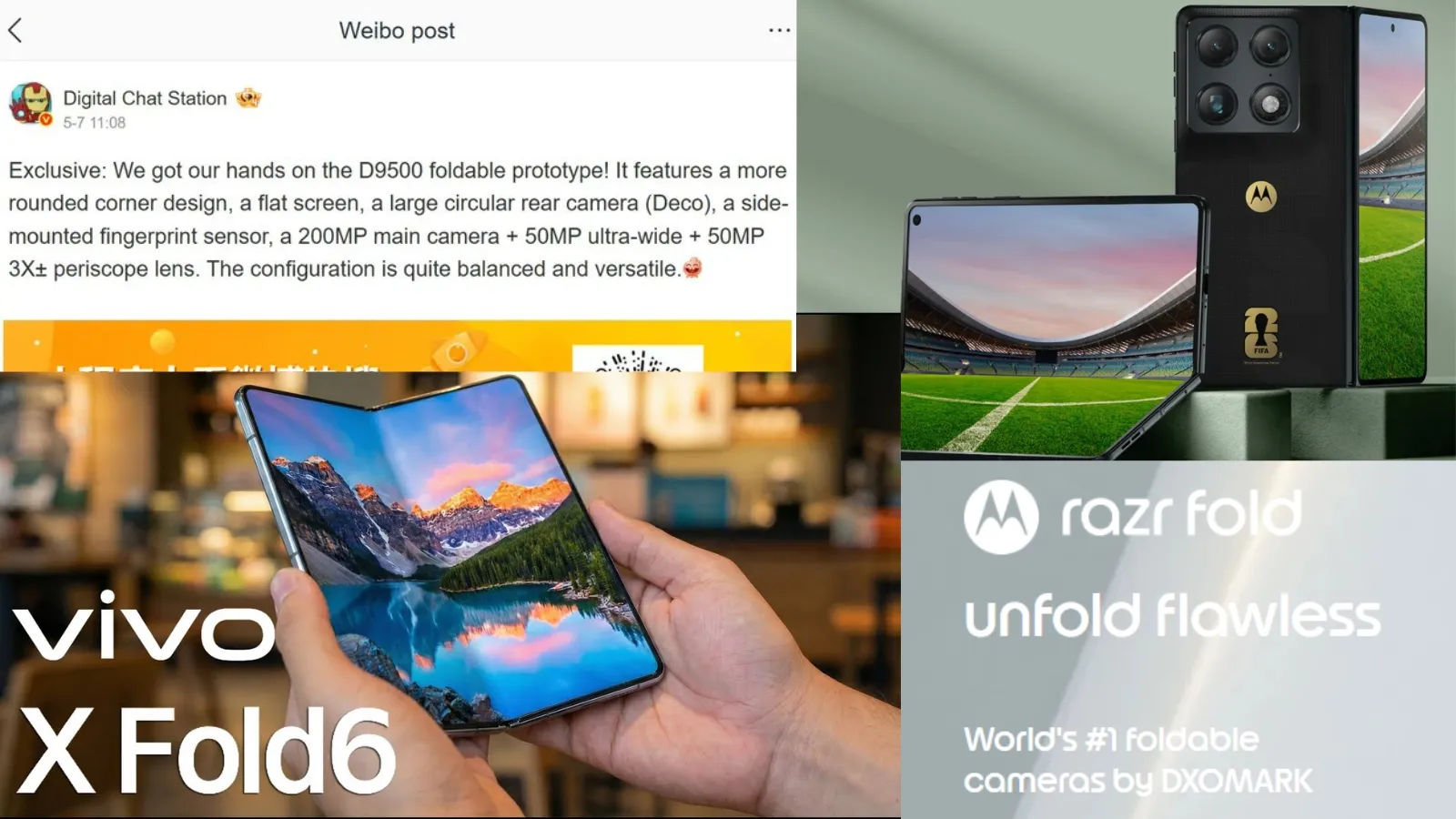
Image Credit - x, Motorola India and youtube.
The foldable phone market may be entering its most important design shift yet. For the last few years, brands were mainly fighting over thinner bodies, better hinges, lighter frames and reduced crease. But in 2026, the real conversation is moving toward a new form factor: wide foldables.
These are book-style foldable phones that are shorter, broader and more tablet-like when opened. Instead of feeling like a tall phone that simply folds open, these devices aim to feel closer to a compact tablet that can still fit inside a pocket.
For Indian buyers, this change matters a lot. A wider foldable can make videos, gaming, multitasking, reading, office work and shopping apps feel more natural. It can also solve one of the biggest complaints around current book-style foldables — the open screen often feels too tall and narrow for real tablet-style use.
That is why 2026 may not be only about Samsung versus Apple. Vivo, Oppo, Honor and Motorola are also becoming important players in this wide foldable race. And for India, this battle could decide which brand owns the next premium phone segment above ₹1 lakh.
What Is a Wide Foldable Phone?
A wide foldable phone is a book-style foldable with a broader body and a more balanced inner display. When opened, it feels more like a small tablet instead of a stretched smartphone screen.
This design is important because many customers buy foldables for productivity, gaming, video, reading and multitasking. But if the aspect ratio feels awkward, the inner display does not fully justify the high price. A wider foldable can make split-screen apps, YouTube, documents, social media dashboards and business tools feel more practical.
In simple words, wide foldables are trying to make foldable phones feel less like experiments and more like true phone-plus-tablet devices.
Why 2026 Could Be the Turning Point for Foldables
The foldable market is no longer just about luxury design. It is now moving toward daily-use practicality. Brands are improving battery size, hinge strength, inner display durability, crease control and camera quality. At the same time, customers are becoming more educated. They now ask about service cost, resale value, display replacement cost, software support and long-term durability before spending ₹1 lakh to ₹2 lakh on a foldable.
Industry projections also suggest that book-style foldables are becoming more important globally. This is a strong signal that brands are preparing for a larger premium foldable push in 2026. Apple’s expected entry, Samsung’s wider design experiments, Oppo’s crease-focused innovation, Vivo’s battery and camera aggression, Honor’s thin design work and Motorola’s India launch plan all point in the same direction.
The next foldable war may not be won by the thinnest phone alone. It may be won by the brand that makes foldables more comfortable, more useful and more reliable for daily buyers.
Vivo X Fold 6: India’s Strongest Leak Example in the Wide Foldable Conversation
Vivo is already one of the strongest India-focused examples in this new foldable shift. Mobile Ki Dukaan has separately covered the Vivo X Fold 6 leak with 200MP camera, 7000mAh battery and expected India pricing , and that report shows why Vivo could become a serious challenger in the next premium foldable cycle.
The Vivo X Fold 6 is not only being discussed as another high-end foldable. It is being watched because it may bring three things Indian premium buyers care about deeply: a powerful camera system, a much larger battery and a more practical foldable experience.
The tipped 200MP camera gives Vivo a strong camera-first angle. The rumoured 7000mAh battery gives it a strong India-market advantage because battery life is one of the biggest concerns for buyers who use phones heavily for calls, business, maps, gaming, videos and social media. If Vivo also improves crease control and moves toward a wider foldable design in future models, it could directly challenge Samsung’s Fold series from a value-for-money point of view.
The expected India price around ₹1,59,999 also places the Vivo X Fold 6 in a very important segment. It is expensive, but still positioned below where Apple’s first foldable could land. For Indian buyers who want a premium Android foldable without going into ultra-luxury pricing, Vivo could become a serious option.
Oppo Find N6: Crease Control Could Become Oppo’s Biggest Weapon
Oppo’s role in this foldable race is different. While Vivo is getting attention for camera and battery, Oppo is getting attention for crease control and premium build experience.
The Oppo Find N6 has been discussed as one of the most refined foldables of 2026, especially because of its near crease-free display experience. For foldable buyers, this matters more than many brands realise. When a customer opens a foldable phone in a shop, the first thing they notice is not the processor. They notice the crease, hinge feel, weight and screen comfort.
If Oppo brings this kind of foldable experience to India with official availability, strong service support and competitive pricing, it could attract camera-first and design-first premium Android buyers. Oppo already has strong offline recognition in India, but its biggest challenge will be availability and pricing in the foldable segment.
For India, Oppo needs one clear message: better crease, better camera, better everyday comfort. If it can deliver that below Samsung’s highest pricing level, it can create real pressure in the premium Android foldable space.
Honor: Thin Design and Big Battery Could Make It a Silent Challenger
Honor is another brand that should not be ignored in the wide foldable discussion. Reports from China suggest that Honor is working on a wide foldable-style device with a broader display approach and a strong camera setup.
Honor’s foldable identity has usually focused on slim design, lightweight feel and battery innovation. That can work well for wide foldables because one of the biggest challenges with this form factor is thickness. If a phone becomes wider but also too heavy, customers may reject it. Honor’s experience in thin foldables could become useful here.
However, Honor’s India challenge is different from Samsung, Vivo, Oppo and Motorola. The brand needs stronger service confidence, better availability and stronger premium positioning. Indian customers may like the design, but at ₹1 lakh-plus pricing, trust becomes equally important.
Samsung Galaxy Z Fold 8 Wide: Samsung May Finally Fix the Narrow Fold Problem
Samsung has the strongest foldable brand recall in India. For many buyers, “foldable phone” still means Samsung Galaxy Z Fold. But Samsung also faces the strongest criticism because many users have complained that the Fold series cover display feels too narrow and the inner display does not always feel like a natural tablet.
That is why the rumoured Galaxy Z Fold 8 Wide is important. Recent leaks suggest that Samsung may be preparing a wider foldable model alongside its regular Fold lineup. If this happens, it could be Samsung’s answer to both Apple’s upcoming foldable and Chinese brands pushing wider designs.
For Indian buyers, Samsung’s biggest advantage will remain trust. Samsung has service network, exchange value, EMI plans, brand confidence and software support. But if Vivo, Oppo, Motorola and Honor bring bigger batteries, stronger cameras and more aggressive prices, Samsung will need more than brand power.
The Galaxy Z Fold 8 Wide could be Samsung’s way of saying that foldables are no longer just about being thin. They also need to be comfortable, wide and more practical for everyday use.
Apple iPhone Fold: The Premium Trigger That Could Make Foldables Mainstream
Apple’s first foldable iPhone is still not official, but the leaks and dummy-unit videos have already created huge global curiosity. The expected design appears to be shorter and wider than traditional foldables, almost like a passport-style device when closed and a compact iPad-like screen when opened.
This is important because Apple does not need to be first to change a category. It only needs to enter the category with enough polish, ecosystem integration and brand confidence. If Apple launches a foldable iPhone in 2026, many Indian buyers who ignored foldables earlier may suddenly start taking the form factor seriously.
But price will be the biggest challenge. If the iPhone Fold or iPhone Ultra lands above ₹2 lakh in India, it will be more aspirational than mass premium. It may not sell in huge volumes immediately, but it can still change customer perception. Once Apple enters foldables, the entire category gets more attention.
For India, Apple’s foldable may become the dream device. But Samsung, Vivo, Oppo and Motorola may benefit from the attention because many customers may explore Android foldables if Apple’s pricing feels too high.
Motorola Razr Fold: India’s Confirmed Book-Style Foldable Moment
Motorola gives this wide-foldable trend a stronger India connection because this is not only a distant leak story. Mobile Ki Dukaan has already reported that the Motorola Razr Fold is set to launch in India on May 13 , marking Motorola’s serious entry into the premium book-style foldable category.
This is a major move because Motorola is mainly known for Razr flip-style foldables. With the Razr Fold, the brand is entering the same space where Samsung Galaxy Z Fold, Vivo X Fold, Google Pixel Fold and Apple’s expected foldable will compete.
The reported 8.1-inch inner display, 6.6-inch outer screen, 6000mAh battery, 80W charging and triple 50MP camera setup make the Motorola Razr Fold one of the most aggressive foldable entries for India’s premium Android market.
For Indian customers, the biggest question will be price. If Motorola prices the Razr Fold too close to Samsung’s Fold lineup, it may remain a niche premium device. But if Motorola brings strong launch offers, bank discounts, exchange bonus and EMI plans, it can become the first real market shock in India’s 2026 foldable race.
This matters especially for cities like Jaipur, Jodhpur, Kota, Udaipur, Ajmer and other growing premium smartphone markets in Rajasthan. Customers in these cities are increasingly interested in flagship phones, but they also ask very practical questions before buying: service, durability, display protection, repair cost and resale value.
Customer Buzz: What Reddit, X, Weibo and Short-Video Users Are Discussing
The customer discussion around wide foldables is different in every region.
In China, Weibo remains the main leak engine. Tipsters and early supply-chain discussions are shaping the conversation around Vivo, Honor, Oppo and wider foldable designs. Chinese users are mainly discussing hinge quality, crease control, battery size, camera modules and whether wide foldables can replace small tablets.
In the US, Reddit users are more divided. Some users like wider foldables because they feel closer to the old Pixel Fold-style design and may be better for videos and gaming. Others worry that shorter and wider foldables may create problems for one-handed use, social media apps, pocket comfort and cover-screen usability.
On X, the discussion is faster and more visual. Leaked renders, dummy units and side-by-side comparison posts are driving the conversation. Apple’s foldable dummy units, Samsung’s Wide Fold leaks and Motorola’s book-style push are all creating strong engagement because users can immediately see how different these devices look from normal smartphones.
On TikTok-style short video platforms, the reaction is likely to be even more design-focused. Foldables are visual products. A wider foldable opening like a mini tablet can attract attention quickly in short videos, especially when creators compare it with an iPhone, iPad mini, Galaxy Fold or Pixel Fold.
In India, the customer conversation is more price-sensitive and practical. Indian buyers are curious about foldables, but they are also careful. They ask whether the inner display will last, whether the hinge can handle daily use, whether the phone will survive heat and dust, and whether service support will be strong outside metro cities.
India Market View: Price Segment Will Decide the Winner
The Indian foldable market is premium, but it is not simple. A buyer spending above ₹1 lakh expects more than a futuristic design. They expect flagship cameras, strong battery, premium display, smooth software, long updates, brand trust and service confidence.
The most important battle will likely happen in three price zones.
₹1.20 lakh to ₹1.50 lakh: The Growth Zone
This is the most exciting zone for India. If Motorola, Oppo, Honor or Vivo can bring a strong wide foldable near this range with launch offers, it could attract buyers who want a foldable but do not want to spend Samsung Ultra or Apple-level money.
This price zone can work well for business owners, creators, premium Android users, tech enthusiasts and customers who want one device for phone plus tablet use.
₹1.50 lakh to ₹1.80 lakh: The Serious Premium Zone
This is where Vivo X Fold 6, Samsung Fold models and other premium Android foldables may compete strongly. Buyers in this range expect flagship performance and long-term confidence. The phone cannot feel like a compromise.
Here, Vivo can push battery and camera. Samsung can push trust and software. Motorola can push aggressive hardware. Oppo can push crease-free design. The brand that combines all four will have the strongest chance.
₹2 lakh and Above: The Apple and Ultra-Premium Zone
If Apple’s first foldable launches near or above ₹2 lakh, it will become an aspirational product. It may not be for every buyer, but it can influence the entire market.
Apple can make foldables more desirable. But its high price may also send many Indian buyers toward Samsung, Vivo, Oppo or Motorola if those brands offer better value.
Retailer Point of View: What Mobile Shops Will Watch
From a retailer point of view, wide foldables will not sell only because they look new. Customers will ask very direct questions before buying.
The first question will be: how strong is the inner display? The second will be: what is the service cost? The third will be: what is the resale value? The fourth will be: what launch offers, bank discounts and exchange bonuses are available?
In markets like Jaipur and Jodhpur, foldables may appeal to business owners, premium Android users, creators, gamers, professionals and customers who want to stand out. But retailers will still need to explain why a foldable is worth more than a regular flagship phone.
Samsung will remain easier to sell because of brand trust. Apple will create huge curiosity if it enters. Vivo can attract camera and battery-focused buyers. Oppo can attract design and crease-conscious buyers. Motorola can attract customers if pricing is aggressive. Honor can attract attention if it improves India availability and service confidence.
Mobile Ki Dukaan Summary
Wide foldables could become one of the biggest premium smartphone stories of 2026. The reason is simple: they solve a real usability problem. Current foldables are powerful, but many still feel awkward because the open screen does not always feel tablet-like enough. A wider design can make foldables more useful for videos, gaming, reading, office work, multitasking and business use.
For India, the winning brand will not be the one with only the thinnest hinge or highest megapixel camera. The real winner will be the brand that gives Indian buyers strong durability, good battery life, trusted service, practical software, exchange value and pricing that feels justified.
Vivo X Fold 6 gives the market a strong leak-based example with a 200MP camera, 7000mAh battery and expected India pricing. Motorola Razr Fold gives India a confirmed launch moment on May 13. Samsung has experience. Apple has brand power. Oppo has crease-control strength. Honor has design ambition.
The wide foldable war has started. For Indian premium buyers, 2026 may finally be the year when foldables stop looking like luxury experiments and start becoming practical tablet-like phones for daily life.